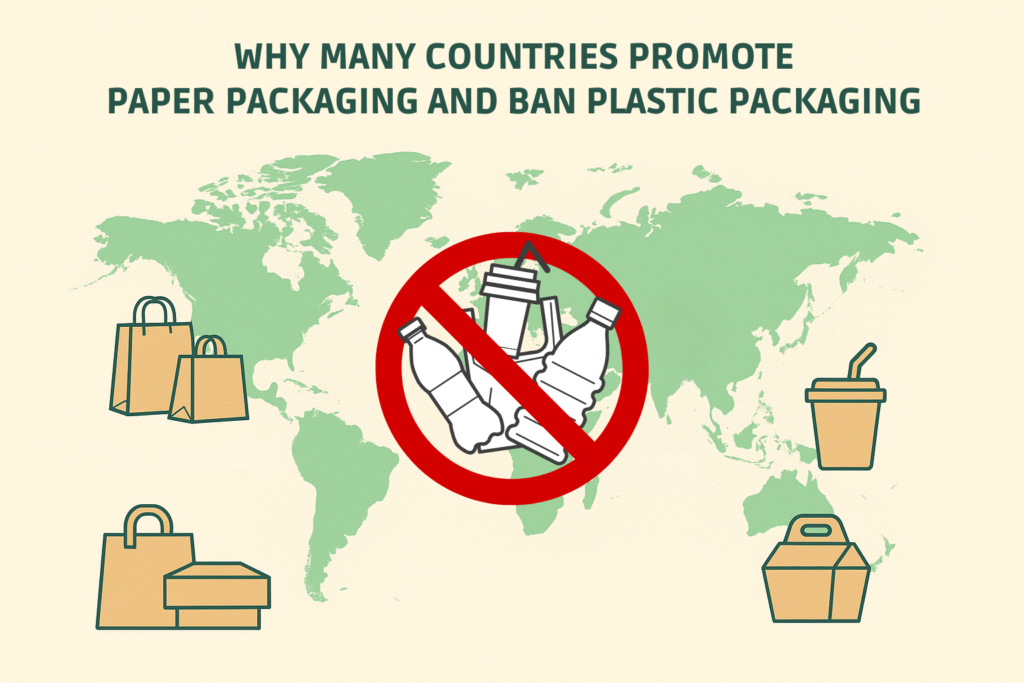
Around the world, nations are taking strong action to reduce plastic pollution and one of the most effective solutions has been the shift toward paper-based packaging. Governments, brands, and consumers alike are recognizing that paper offers a cleaner, safer, and more sustainable alternative to plastic.
Let’s explore why many countries are promoting paper packaging and implementing strict plastic bans including the recent major step by the United Arab Emirates (UAE).
Plastic Pollution Is a Global Crisis
Every year, the world produces more than 300 million tonnes of plastic waste, and nearly half of it is single-use used once and then discarded.
Most of this plastic ends up in landfills, oceans, and rivers, taking hundreds of years to decompose. It pollutes water, harms marine life, and releases microplastics into our food chain.
Countries such as India, France, Canada, and Kenya have responded by banning or limiting single-use plastics, promoting biodegradable alternatives like paper instead.
Paper Packaging Is Eco-Friendly and Biodegradable

Unlike plastic, paper packaging naturally decomposes within weeks and leaves no harmful residues. It can also be recycled multiple times, reducing waste and conserving resources.
From paper bags and boxes to cups and food containers, paper packaging is safe, hygienic, and ideal for businesses that want to protect both the environment and their brand image.
Paper packaging supports the three R’s: Reduce, Reuse, Recycle.
Strong Government Regulations Worldwide
Many governments are introducing plastic bans and eco-packaging policies to meet their sustainability goals and reduce carbon emissions.
Examples include:
- European Union – Ban on several single-use plastic items.
- India – Nationwide ban on certain plastic products from 2022.
- Canada – Gradual phase-out of non-recyclable plastic packaging.
Such regulations encourage industries to adopt paper and compostable alternatives that align with environmental standards.
Case Study: UAE’s Shift Away from Single-Use Plastics
The United Arab Emirates (UAE) is one of the latest nations to take a firm stand against plastic pollution.
- The UAE implemented a nationwide ban on single-use plastic shopping bags from January 1, 2024, under Ministerial Resolution No. 380 of 2022.
- The ban prohibits the import, production, and trade of single-use plastic bags across the country.
- A phased timeline will expand the ban further — covering plastic cups, plates, cutlery, and food containers by January 1, 2026.
- Dubai and other emirates have set clear enforcement measures, including fines up to AED 2,000 for violations.
- Some exemptions exist for items like garbage bags, packaging for meat and produce, and products made from recycled materials.
This bold initiative reflects the UAE’s commitment to sustainability and aligns with its broader goals to promote the circular economy and reduce environmental impact.
For packaging suppliers and manufacturers, this move creates a significant opportunity. The demand for eco-friendly paper packaging is rising rapidly across the UAE and the Middle East, as retail and food service businesses transition away from plastics.
Consumers Prefer Responsible Brands
Modern consumers are more environmentally aware and value sustainability in the products they buy.
According to global surveys, over 70% of shoppers prefer eco-friendly packaging even if it costs slightly more.
Businesses that switch to paper packaging not only help the planet but also build a positive brand image, especially in food, retail, and hospitality sectors.
Innovation Has Made Paper Packaging Stronger
Paper packaging has evolved far beyond simple brown bags.
With advanced manufacturing techniques and food-grade coatings, today’s paper products are durable, leak-resistant, and customizable. They can now safely replace plastic in many applications — from takeaway boxes to cutlery and trays.
This innovation ensures that going green doesn’t mean compromising on quality or performance.
Paper Supports a Circular Economy
Paper packaging fits perfectly into the circular economy model, where materials are continuously reused and recycled instead of discarded.
This not only reduces waste but also minimizes environmental impact and promotes responsible resource management.
By choosing paper over plastic, businesses actively contribute to a cleaner, greener planet.
Conclusion
The global move from plastic to paper packaging is not just a trend — it’s a necessary change for our planet’s future.
With strong policies like the UAE’s single-use plastic ban, growing consumer awareness, and constant innovation, paper packaging has emerged as the leading alternative that balances functionality with sustainability.
At WSCS India, we proudly support this mission by offering a wide range of eco-friendly paper packaging products — from bags and boxes to cups and cutlery — designed to help businesses reduce their plastic footprint while maintaining quality and brand appeal.
Also read:
Why Your Business Needs to Switch to Paper Cutlery